Bobsleigh vs Skeleton vs Luge: What’s the Difference?

What Is Bobsleigh?
Bobsleigh, sometimes called bobsled, is the most widely recognized of the three sports. Athletes compete in teams of two or four, sprinting alongside the sled before jumping in and racing down the track together.
Inside the sled, a driver uses a steering system to guide the team through corners at speeds that can exceed 120 kilometres per hour. Because of its enclosed design and team dynamic, bobsleigh feels more stable than the other disciplines, though it remains extremely fast and powerful.
The sport combines explosive strength at the start with precise steering throughout the run, making it both a physical and technical challenge.

What Is Skeleton?
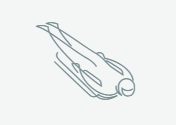
Skeleton offers a completely different perspective. Athletes run and dive headfirst onto a small sled, racing face down with only a few centimeters between their helmet and the ice.
There is no steering mechanism. Control comes from subtle shifts in body weight, which guide the sled through each turn. This makes skeleton feel direct and intense, as every movement has an immediate impact.
Even though skeleton can be slightly slower than bobsleigh, the headfirst position creates a stronger sensation of speed and exposure, making it one of the most adrenaline-filled winter sports.
What Is Luge?
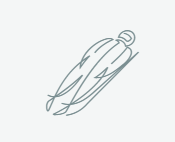
Luge is defined by precision and control. Athletes lie on their backs, feet first, on a streamlined sled designed for speed.
They begin from a seated position and use handles to push themselves onto the track before settling into a low aerodynamic posture. Steering is achieved through small movements of the legs, shoulders, and core.
Compared to skeleton, luge appears smoother and more controlled. That control requires a high level of technical skill, as even small adjustments can affect the entire run.
Key Differences Between Bobsleigh, Skeleton, and Luge
While all three sports share the same track, they differ in how athletes interact with the sled and ice.
Bobsleigh focuses on teamwork and steering within a sled. Skeleton emphasizes headfirst positioning and body control. Luge relies on precise movements and a feet-first riding position.
These differences create three unique experiences, even though the setting is identical.
Where to Experience Sliding Sports in Whistler
For anyone looking to experience these sports beyond watching, the Whistler Sliding Centre offers a rare opportunity. Located in Whistler, the track was built for the 2010 Winter Olympics and remains one of the fastest sliding tracks in the world.
It is one of the few places globally where bobsleigh, skeleton, and luge are all practiced at an elite level on the same track. Visitors can take part in a public bobsleigh experience, riding the Olympic course at high speed with a trained pilot.
This makes it one of the most unique winter activities in Whistler and a standout experience for anyone interested in Olympic sport.